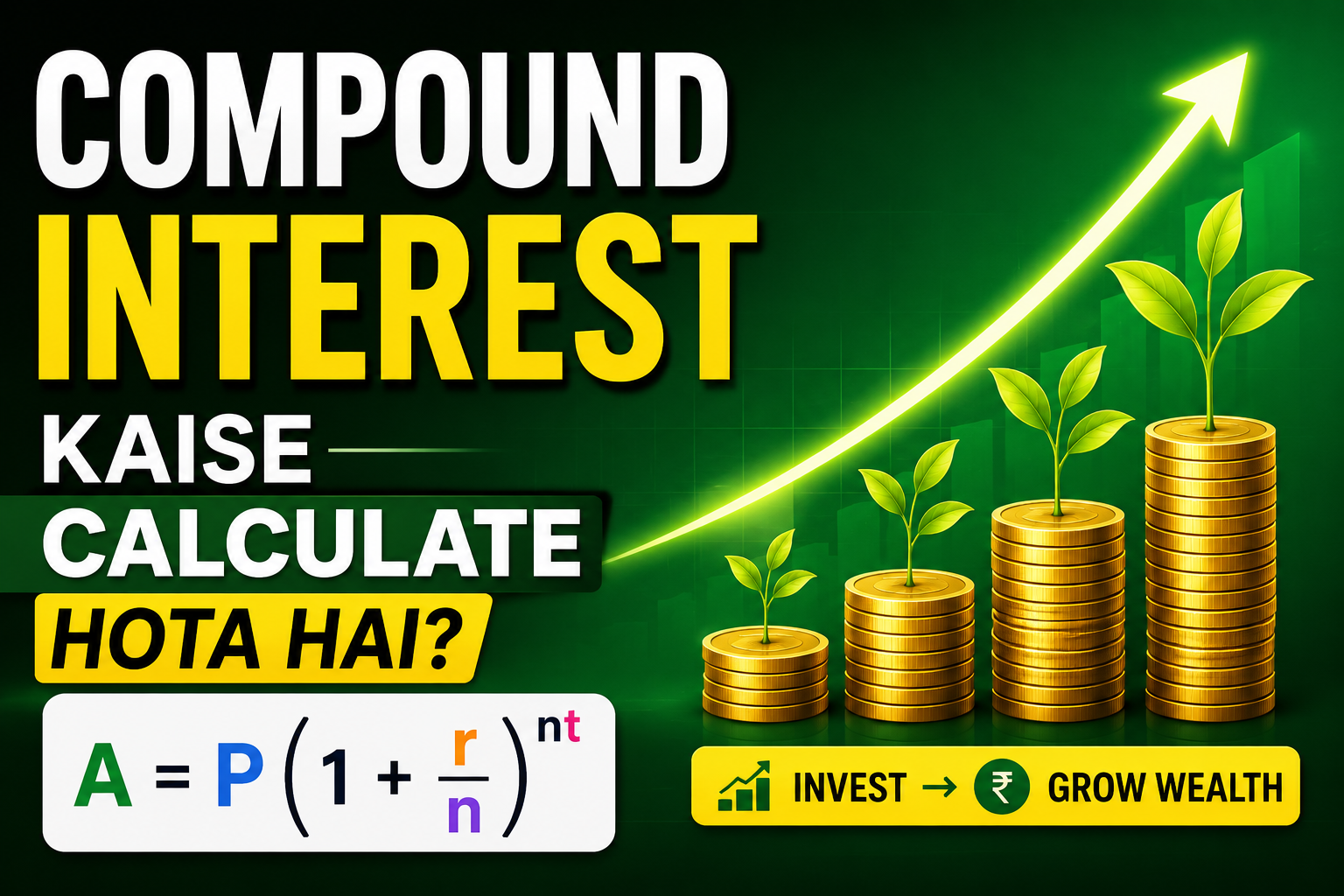
Compound Interest Kaise Calculate Hota Hai? — Formula aur Real Examples Hinglish Mein
S1 — Woh Eighth Wonder of the World
Einstein ne (kahte hain) kaha tha — “Compound interest is the eighth wonder of the world. He who understands it, earns it; he who doesn’t, pays it.” Rahul ne ₹10,000 FD mein rakh diya aur bhool gaya. 30 saal baad dekha — ₹10,000 se ₹1,74,494 ban gaye the sirf 10% compound interest par. Usne kuch nahi kiya — paisa khud kaam karta raha. Compound interest kaise calculate kare — yeh samajhna investment ki neenv hai.
Simple short answer: ₹50,000 par 12% compound interest 10 saal mein ₹1,55,292 ban jaata hai — jabki simple interest mein sirf ₹1,10,000. ₹45,292 ka extra sirf “interest on interest” se aata hai. CalcDesk compound interest calculator par apna amount daalein aur instantly dekhin kya milega.
S2 — Compound Interest Kya Hota Hai?
Simple Interest mein sirf original principal par interest milta hai — har saal same fixed amount. Compound Interest mein interest, previous interest par bhi lagta hai — har period mein principal badhti jaati hai.
Simple analogy: snowball. Chhota snowball pahaad se neeche ludo — jaise neeche aata hai, zyada barf chipakti jaati hai — bolta badi hoti jaati hai. Pehle slow, phir tezi se. Yahi compound interest hai — shuruaat mein kum dikhta hai, baad mein explosive.
Common misconception: log sochte hain compound interest sirf bank instruments mein hota hai. Nahi — mutual funds, stocks, PPF, EPF — sab compounding par kaam karte hain. Aur credit card debt bhi compound hoti hai — wahan yeh aapka dushman hai.
S3 — Compound Interest Formula
A = P × (1 + r/n)^(n×t)
A = Maturity Amount
P = Principal (starting amount)
r = Annual interest rate (decimal — 12% = 0.12)
n = Compounding frequency per year
(1=annual, 4=quarterly, 12=monthly, 365=daily)
t = Time in years
Simple Interest (for comparison):
A = P × (1 + r × t)
Example: ₹50,000, 12%, 10 saal, Annual:
A = 50,000 × (1.12)^10 = 50,000 × 3.1058 = ₹1,55,292
Simple Interest same: 50,000 × (1 + 0.12 × 10) = ₹1,10,000
CI ka extra: ₹45,292 — sirf compounding se!
S4 — Real Examples
Example 1 — Priya, ₹1 Lakh Lump Sum, Long Term
Priya ne 25 saal ki umar mein ₹1 lakh ek mutual fund mein lagaya — 12% CAGR expected:
- 10 saal baad (35 saal): ₹3,10,585
- 20 saal baad (45 saal): ₹9,64,629
- 30 saal baad (55 saal): ₹29,95,992 — almost ₹30 lakh sirf ₹1 lakh se!
Simple interest mein 30 saal mein sirf ₹4.6 lakh hota. Compounding ka fark: ₹25.4 lakh extra. Yahi jaadu hai long-term investing ka.
Example 2 — Ravi, FD vs Equity — Same Amount, Same Time
Ravi ne ₹1 lakh 20 saal ke liye lagaya — do options:
- FD 7% annual compounding: ₹3,86,968
- FD 7% quarterly compounding: ₹4,00,640 — ₹13,672 extra sirf quarterly compounding se
- Equity fund 12% annual: ₹9,64,629 — ₹5.77 lakh zyada! (market risk ke saath)
FD calculator aur SIP calculator se apne specific numbers compare karein.
Example 3 — Sunita, Inflation ka Dark Side
Sunita ke paas ₹5 lakh savings account mein pade hain — 3.5% interest. Inflation 6%:
- 10 saal mein savings 3.5%: ₹7,06,831
- 10 saal mein inflation 6%: ₹5 lakh ki purchasing power = ₹8,95,424 chahiye
- Real loss: ₹1,88,593 — paisa badha lekin actually poor ho gayi!
Inflation bhi compound hoti hai — aur yeh silent killer hai savings ka. Isi liye inflation-beating returns zaroori hain long-term mein.
S5 — Tables
Table 1: ₹1 Lakh ka Compound Interest — Different Rates aur Tenures
| Rate | 10 Saal | 20 Saal | 30 Saal |
|---|---|---|---|
| 6% (PPF-ish) | ₹1,79,085 | ₹3,20,714 | ₹5,74,349 |
| 7.1% (PPF) | ₹1,98,979 | ₹3,95,926 | ₹7,87,831 |
| 8% (FD) | ₹2,15,892 | ₹4,66,096 | ₹10,06,266 |
| 12% (Equity est.) | ₹3,10,585 | ₹9,64,629 | ₹29,95,992 |
| 15% (Aggressive) | ₹4,04,556 | ₹16,36,654 | ₹66,21,177 |
Table 2: Compounding Frequency Comparison — ₹1 Lakh, 8%, 10 Saal
| Frequency | Maturity Amount | Extra vs Annual |
|---|---|---|
| Annual (1x/year) | ₹2,15,892 | Baseline |
| Semi-annual (2x/year) | ₹2,18,287 | +₹2,395 |
| Quarterly (4x/year) | ₹2,20,804 | +₹4,912 |
| Monthly (12x/year) | ₹2,21,964 | +₹6,072 |
| Daily (365x/year) | ₹2,22,535 | +₹6,643 |
S6 — Common Galtiyan
S7 — Tips
Compound Interest Calculator — Free aur Instant
CalcDesk ke compound interest calculator mein principal, rate, time aur frequency daalein — maturity amount instantly milega. Simple interest se comparison bhi dikhta hai. Koi registration nahi, free.
CI Calculator Open Karein →S9 — Related Articles
Aksar Pooche Jane Wale Sawaal
Simple interest aur compound interest mein kya fark hai?
Simple Interest mein interest sirf original principal par lagta hai — har saal same amount. Compound Interest mein interest, pichle period ke interest par bhi lagta hai — principal badhti rehti hai. Example: ₹1 lakh, 10%, 5 saal. SI: ₹50,000 interest. CI (annual): ₹61,051 interest — ₹11,051 zyada. 20 saal mein: SI ₹2 lakh interest vs CI ₹5,72,750 — fark ₹3,72,750. Yahi compounding ka magic hai — time badhne ke saath fark exponentially badhta jaata hai.
Compounding frequency ka kya fark padta hai?
Compounding frequency jitni zyada, utna zyada return. Same ₹1 lakh, 8%, 10 saal: Annual: ₹2,15,892. Quarterly: ₹2,20,804. Monthly: ₹2,21,964. Daily: ₹2,22,535. Fark chhota lagta hai short term mein lekin 20-30 saal mein meaningful hota hai. FD banks quarterly compound karte hain — PPF annually. SIP mutual funds daily NAV par kaam karte hain — effectively highest frequency compounding milti hai.
Rule of 72 kya hota hai?
Rule of 72 ek shortcut hai ye jaanne ke liye ki investment double hone mein kitna time lagega. Formula: Years to double = 72 ÷ Interest Rate. 6% par: 12 saal. 8% par: 9 saal. 12% par: 6 saal. 15% par: 4.8 saal. Ulta bhi kaam karta hai: 10 saal mein double karna hai to 72 ÷ 10 = 7.2% minimum return chahiye. Inflation ke against bhi: 6% inflation par 12 saal mein purchasing power aadhi ho jaati hai.
Compound interest se wealth banana ke liye kya karna chahiye?
Teen cheezein compound interest ko maximum banana mein kaam karti hain. Pahli — jaldi shuru karo: 25 saal mein shuru karna 35 saal se kaafi zyada effective hai 30 saal horizon par. Doosri — zyada return dhundho: FD 7% vs equity 12% ka 20 saal mein ₹1 lakh par ₹5.77 lakh ka fark hai. Teesri — continuity rakho: beech mein mat nikalo; compounding ka magic uninterrupted time mein hai. Bonus: reinvest dividends — growth plan mein rakho mutual funds.
Debt par compound interest kaise hota hai?
Compound interest sirf investment par accha lagta hai — debt par yahi aapka dushman banta hai. Credit card par 36-42% annual interest hota hai. ₹50,000 credit card debt, 40% annual, sirf minimum payment se 3 saal mein ₹1,37,000+ ho sakta hai. Isi liye credit card balance hamesha full pay karo. Personal loan bhi 12-18% compound interest lagata hai — jaldi foreclose karo. Savings mein compound kama lo, debt mein compound se baho — yahi financial planning ka golden rule.
Inflation bhi compound hoti hai kya?
Bilkul — inflation bhi compound hoti hai. India mein average inflation 5-6% per year rahi hai historically. Rule of 72: 6% inflation par 12 saal mein purchasing power aadhi. Matlab aaj ₹1,000 mein jo milta hai woh 12 saal baad ₹2,000 mein milega. Agar savings 5% return de aur inflation 6% — real return negative. Isliye long-term mein inflation-beating returns zaroori hain. Equity funds historically 12-14% — 6% inflation ke baad 6-8% real return milti hai.
CalcDesk compound interest calculator kaise use karein?
calcdesk.in/finance/compound-interest-calculator/ kholen. Inputs: principal (jaise ₹50,000), annual interest rate (jaise 12%), time in years (jaise 10), compounding frequency (annual/quarterly/monthly/daily). Calculator instantly dikhata hai: maturity amount, total interest, aur simple interest comparison. Alag frequencies compare karein. Rule of 72 bhi milega. SIP calculator se saath compare karein — lump sum vs monthly SIP ka long-term comparison bahut useful hai. Koi registration nahi, free.
Yeh article sirf educational purpose ke liye hai. Equity returns historical hain aur guaranteed nahi. Investment se pehle apne financial goals aur risk tolerance consider karein. Poora disclaimer padhein →